Custom Home Builder | Featured Custom Home Builders
Custom Home Builder
The way toward building a custom home is frequently the most misjudged section of lodging chasing. Said in an unexpected way, a high level of planned home purchasers begin figuring they might need to manufacture a custom home however then wind up purchasing a previously fabricated "spec" home or working straightforwardly with a manufacturer to adjust a home that is being constructed.
The explanation behind the disarray is that most would-be "custom home purchasers" have the fundamental sequencing incorrectly. They believe that they will have the option to discover and purchase an ideal parcel, at that point employ a modeler to structure their fantasy home, at that point take the planner's arrangements to a bunch of manufacturers who will enthusiastically offer out the venture, at that point pick the developer with the most reduced offer. Actually the request is typically turned around. That is, a home purchaser winds up picking a developer, and afterward together they recognize the part and fabricate the house. The procedure is generally quicker, smoother and more affordable for the purchaser. Here's the reason:
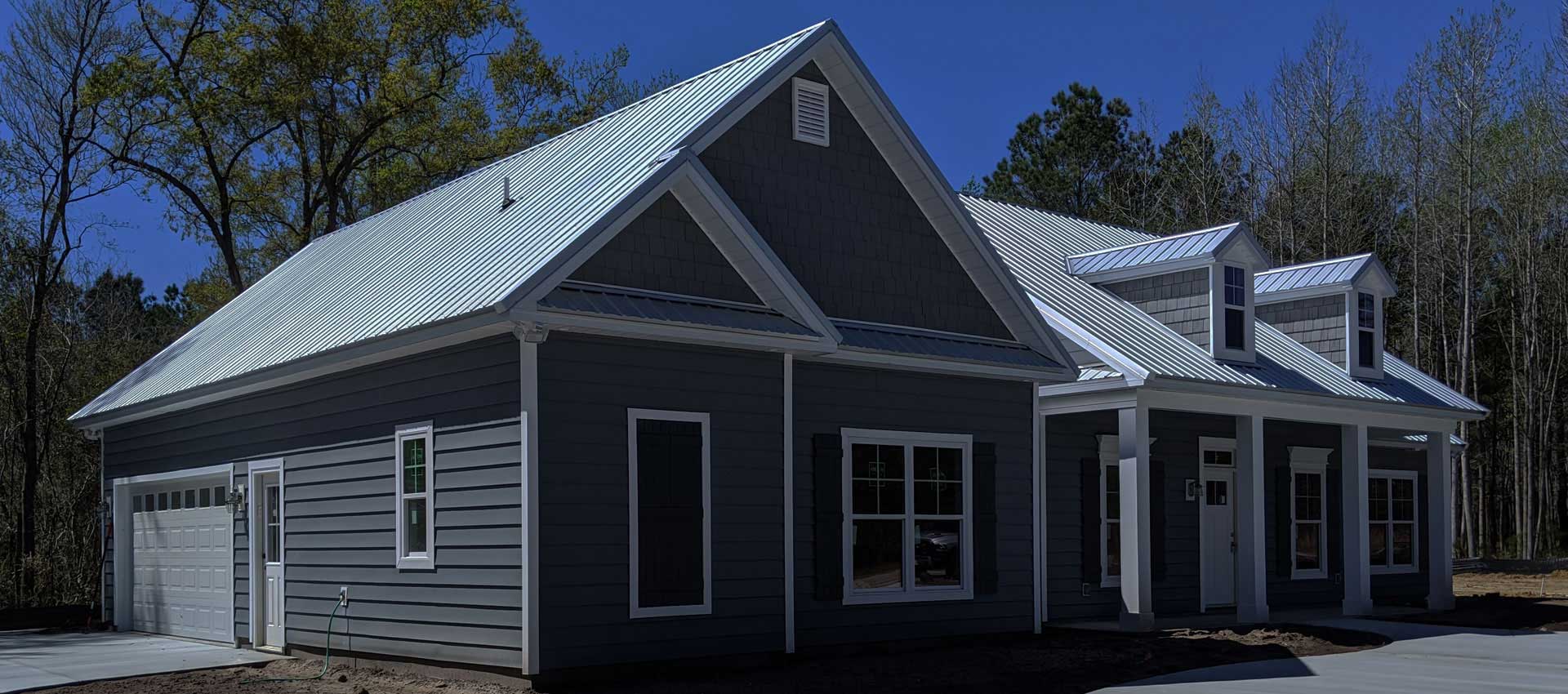
To begin with, we should begin with recognizing a ton to buy. To do as such, it's basic to comprehend the manufacturer/new development showcase. In our neighborhood land advertise (the DMV), you've most likely seen a huge amount of new development. While a portion of the development is "custom" extends in which a land owner has employed an engineer and manufacturer to build a home on their part, by far most of these activities are "spec" homes. A spec home is one where a manufacturer/designer purchases a ton and afterward structures and assembles another home on "hypothesis" that they will have the option to offer to a buyer.
At the point when land markets are solid (like they are currently), you'll see expanded spec home action. Manufacturers and engineers contribute huge measures of vitality and assets into attempting to distinguish the best parts on which to fabricate a spec home. At the point when they locate a potential parcel, they are set up to jump and rapidly set up a perfect, money composed proposal with constrained possibilities and shutting terms redid to the merchant's needs (short or long repayment, lease back period, and so on.). They attempt to make it simple and basic for the vender to consent to their offer. There is a platitude among spec home developers that they bring in their cash on the part buy (instead of a definitive offer of the completed home). The better the parcel, the less hazard it is to the developer. Truth be told, if the parcel is adequate (and the manufacturer has a sufficient notoriety), the developer may have the option to presell the new home before it's even constructed.
How does a manufacturer recognize and value the parts they need to purchase? Everything begins with the "outsale" cost. The outsale cost is the inevitable value that a manufacturer envisions they will have the option to sell another home for on that part. From the outsale value, the manufacturer pulls out the hard expenses and delicate expenses of building/selling just as the net revenue they plan to catch. (Hard expenses are the immediate expenses of the physical development; delicate expenses are the "non-manufacture" costs which incorporate conveying costs, structural charges, allowing charges, designing charges, land commissions, and so on.) Whatever is extra is how much the developer can pay for the part.
On the off chance that an area doesn't have any new development there is more hazard for the manufacturer on the grounds that there is no point of reference at the outsale cost. Then again, if an area has a few recently built homes that have sold in the course of the most recent couple of years, there is less hazard for a developer as they will have supporting information with pertinent, similar deals. The more new-home deals in an area, the more that area has "turned over" and the less dangerous that area is to a manufacturer.
For instance, suppose an area of 200 homes initially inherent the 1960s and 1970s has had twelve "spec" home deals throughout the most recent couple of years extending from $1.6 million to $1.8 million with a normal close cost of $1.7 million. The one $1.6 million home deal appeared lower since it was one of the main houses to turn over and on a busier road. The $1.8 million deal was later however on a moderately greater parcel and a generally bigger home.
A spec developer taking a gander at that data may expect their outsale cost is $1.7 million. The developer may likewise expect that it will cost them $600,000 in hard expenses to assemble that home and $200,000 in delicate expenses. The manufacturer should make $200,000 in benefit. With this math, the developer could pay $700,000 for the part. (Note: Our market has gotten so serious among manufacturers that the times of the straightforward "1/3-1/3-1/3 Rule" are finished. Under the 1/3-1/3-1/3 Rule, the math was 1/3 for the construct costs (hard and delicate), 1/3 for the part and 1/3 for benefit.)
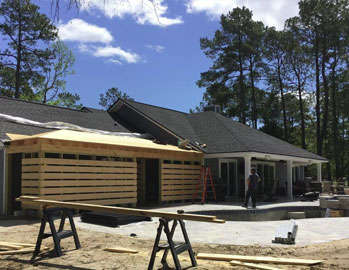
Alright, so I'm not catching this' meaning for the purchaser who needs to locate their own parcel to assemble their fantasy home? It implies they will need to contend with manufacturers to locate a decent part and compose a serious offer. The purchaser is confronting a difficult task for a few reasons.
To begin with, purchasers are off guard since it very well may be amazingly hard to track down a great deal that has building potential. Developers regularly have gone through years with letter battles, entryway thumping and one-on-one gatherings with potential venders of parcels. They forcefully attempt to discover and bolt up circumstances before they are accessible to the overall population. Developers kiss numerous frogs to discover parcels that are important to them.
A subsequent disservice is that purchasers normally don't have the vital mastery and assets to assess a ton's latent capacity and in this manner move too gradually. Whenever a chance to buy a great deal emerges, developers have a prepared group of designers, engineers, realtors and staff set up to play out the important due industriousness. Purchasers, then again, regularly begin to amass their group after the part opportunity has introduced itself. To secure themselves, purchasers regularly request generally long "study periods" in their buy contract so they can collect their group and play out the due persistence. Venders of parcels regularly don't need the danger of a long report period.
Purchasers are all in all correct to be wary when composing a proposal to buy a ton. Not all parcels are the equivalent and there might be concealed issues or difficulties. A few models are mishaps (which decide how a long way from the property limit the house can be constructed), storm easements, geology, soil quality, title issues and absence of open water and additionally sewer hookups. A portion of these issues and difficulties may make extra expenses or delays and may forestall development through and through. For a purchaser curious about these issues, it can take 30 days (or more) to amass a group and arrive at a point where they can securely expel all possibilities and push ahead with a buy. A 30 or more day possibility period is an unending length of time in the serious land world. A shrewd developer can frequently finish their due constancy in seven days or less.
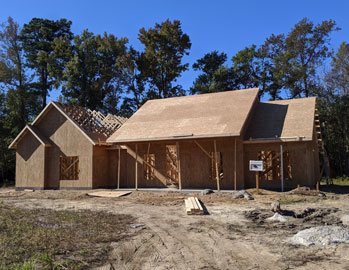
Another impediment to a purchaser is the thing that we warmly call "absence of vision." Frankly, it's hard for a run of the mill purchaser to take a gander at a great deal (regardless of whether empty or with a teardown home on it) and see the potential. For instance, most purchasers search for a ton that is impeccably level. The absolute best parcels, as we would see it, have a delicate incline up to the house front and afterward a delicate slant toward the back part line, and from one side to the next. That part will in general be better for seepage, takes into consideration the passage for the house to be at (or somewhat above) road level, and may even take into account walkouts on principle and lower levels. A few parts that seem to have geology issues (for example, excessively slanted) may in reality be extraordinary parcels. Manufacturers can likewise do ponders with regrading and holding dividers. When a purchaser sees the potential, it's frequently past the point of no return — the parcel is as of now under agreement by a spec home manufacturer.
More Wydlers: Thinking about leasing that house you can't sell? Being a landowner may not be as basic as it appears.
At long last, a purchaser likewise has an impediment with regards to financing. For a customary home loan, a moneylender requests that the borrower affirm that they will in reality live in the property as a primary home. In the event that the purchaser is tearing it down, they can't make that portrayal. This portrayal restricts a purchaser to two financing alternatives — all money or development financing. Money is top dog when buying a ton and better permits a purchaser to rival developers. Development financing can be progressively hazardous in light of the fact that it is less appealing to the part proprietor — it's increasingly unsafe and the purchaser won't have the option to appear at the end table with the important assets — and in light of the fact that it requires the purchaser to as of now have an agreement with the manufacturer.
Development financing comes in different structures yet fundamentally permits the purchaser to pay for the parcel and development costs with one credit. The bank will permit the manufacturer to make "draws" on the advance as per a draw plan when certain structure edges are met. So as to give a development credit, the loan specialist will need to do an evaluation of the completed new house in the present market. So as to do the examination, the appraiser needs to see the structure, floor plans, highlights and determinations. What's more, thus lies the Catch-22. How is the purchaser going to get development financing in the event that they haven't recognized the parcel or the developer or the plan? They can't!
On the positive side, a purchaser has one particular preferred position over manufacturers and designers when buying a ton. That is, a purchaser can pay more for a ton than a manufacturer can. As we said previously, a manufacturer will incorporate a net revenue with the value they will pay for a ton. A purchaser doesn't need to. Said in an unexpected way, a purchaser isn't really attempting to benefit from the development of their home, and can pay "above" advertise costs yet still accomplish their family's targets (upbeat home and area
Please Visit here for more ideas of Custom Home Builder
Comments
Post a Comment